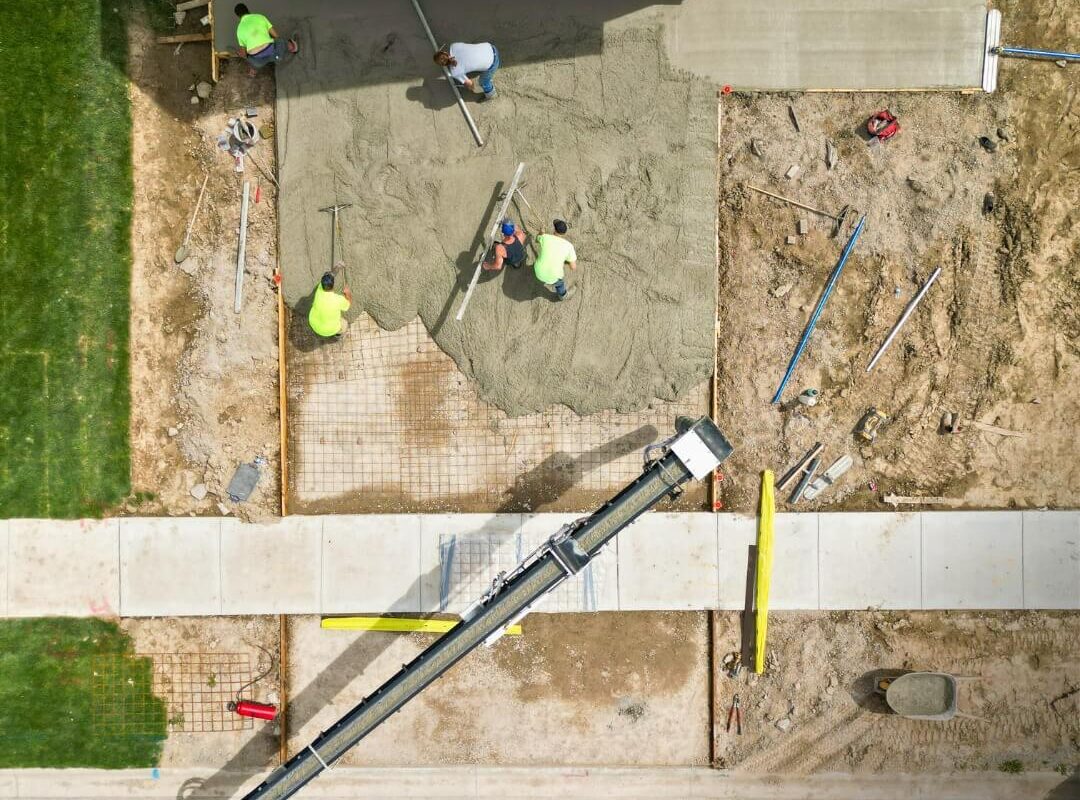
Heated concrete driveways in Ontario can be worth the cost where dependable winter access or reduced shovelling is a high priority, especially during an already-planned driveway replacement. They are harder to justify on snow-removal savings alone. Installation, energy, maintenance and eventual repairs all belong in the comparison.
A steep entrance presents a different decision from a level driveway with affordable snow removal. Decide which area needs to stay accessible, then compare heating costs with your current winter arrangements.
How Electric and Hydronic Snow-Melt Systems Work
Electric systems use heating cables or mats beneath the surface. A controller energizes them when needed, often using temperature and moisture sensors. They need suitable electrical capacity and a design matched to the heated area and local conditions.
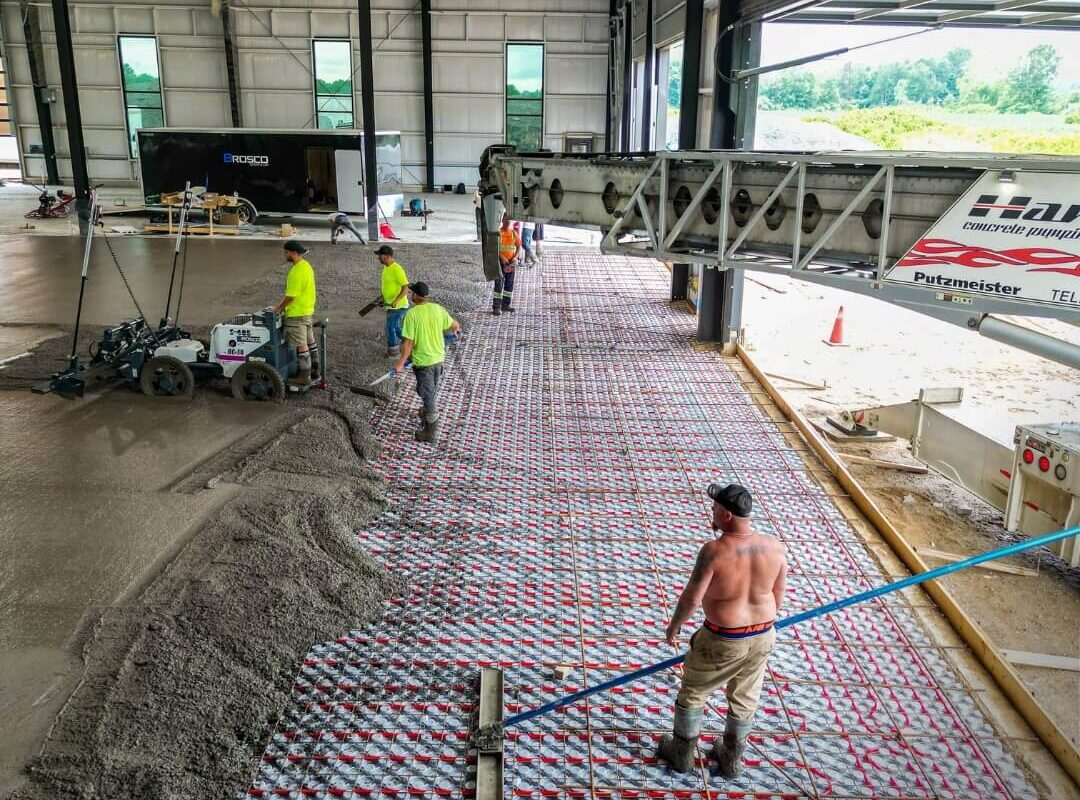
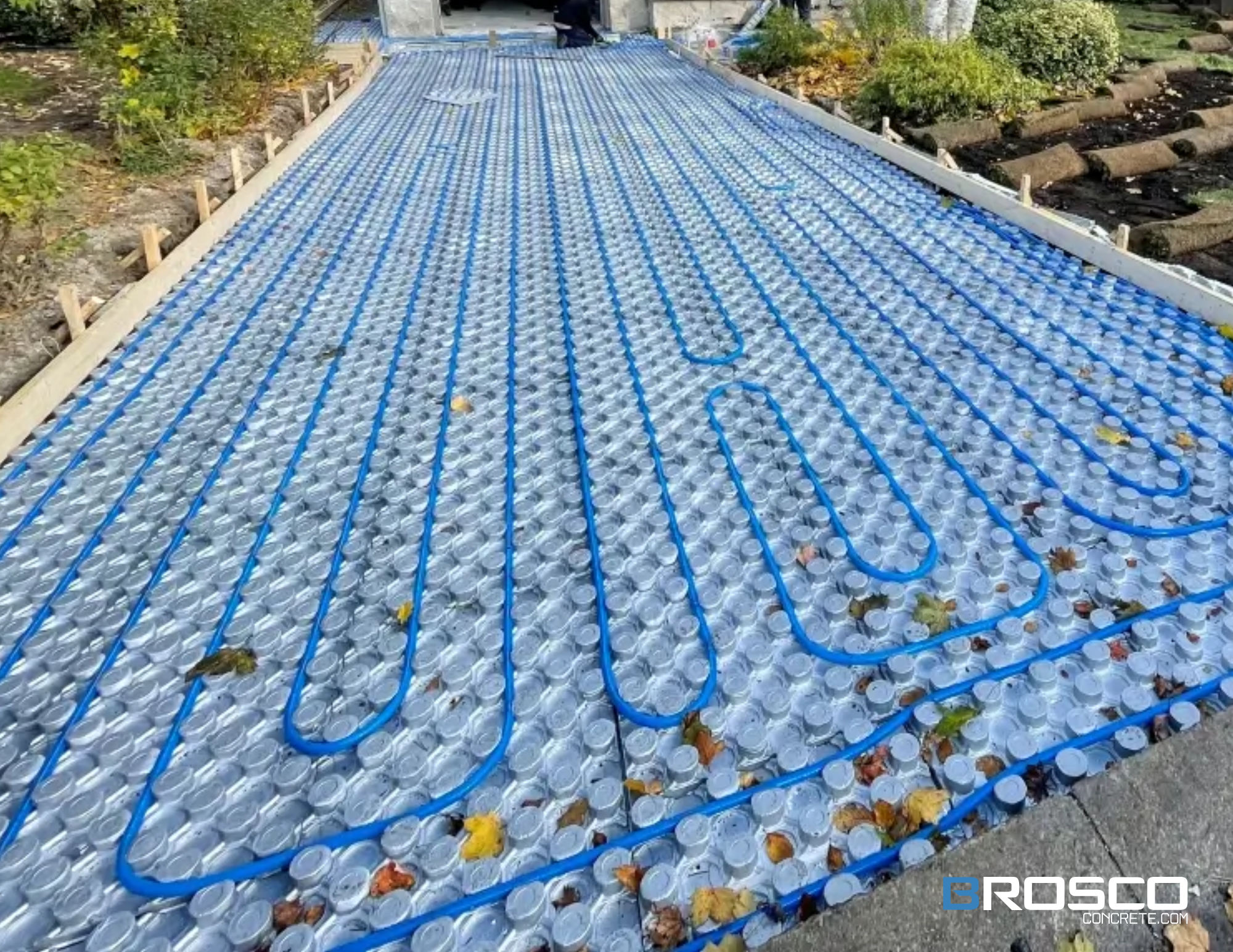
Hydronic systems circulate heated fluid through tubing embedded in the slab. The installation includes a heat source, pumps, controls and a fluid mixture selected for freeze protection. A natural-gas boiler is one possible heat source, but availability and the building’s existing equipment affect the options.
An existing boiler does not automatically have spare capacity for a driveway. The designer must assess indoor demand, outdoor load and combined operation. Pumps and controls still need electricity, even when the heat comes from gas.
| Consideration | Electric | Hydronic |
|---|---|---|
| Heat delivery | Embedded cables or mats | Embedded tubing carrying heated fluid |
| Main capacity question | Can the electrical service support the added load? | Can the heat source and distribution system meet the outdoor demand? |
| Equipment outside the slab | Controls and electrical equipment | Heat source, pumps, controls and associated piping |
| Ongoing checks | Controls, sensors and electrical system | Those controls plus heat-source service and fluid condition |
Neither system guarantees a clear surface in every storm. Output, wind, snowfall, slab temperature and control settings affect performance.
What Does a Heated Driveway Cost in Ontario?
Published prices are useful only if their scope is clear. A price for heating cable is not a price for removing an old driveway and completing a new heated slab.
As one contractor example, Country Renovations’ Toronto pricing guide advertises these 2026 totals for a 500-square-foot driveway, explicitly in Canadian dollars:
- Electric: $10,500 to $14,000 across its listed tiers.
- Hydronic: $24,000 to $32,000, including a boiler, across its listed tiers.
The guide labels those examples as installed totals including permits and HST, and ties its pricing to work done alongside surface replacement. It also identifies extra demolition costs for removing a driveway solely to add heat. These are contractor-published estimates, not independently verified transaction prices, a London market average or Brosco pricing. Confirm the complete concrete, demolition, drainage, service-upgrade and equipment scope in a written quote. A Toronto package cannot establish the cost of your property.
For a different comparison, WarmlyYours’ Canadian cost guide lists approximately CAD $9,590-plus for the heating elements alone for a 600-square-foot full-coverage example. Controls, electrical work and the driveway itself are separate from that element-only figure. Do not add it to a complete-system price that already includes heating elements.
Obtain itemized quotes; these examples do not price the same project.
Ask for Two Prices Before Choosing
If the driveway needs replacement anyway, ask for the same concrete project priced with and without heating. The difference shows the added investment more clearly than comparing a heated replacement with one winter’s snow-removal bill.
Request a breakdown covering:
- removal, excavation, base work and drainage
- concrete, reinforcement, joints and selected finish
- heating elements or tubing, insulation and controls
- electrical supply or heat-source equipment and connections
- required permits, testing and commissioning
- taxes, exclusions and warranty responsibilities
Replacing a sound driveway solely to add embedded heating changes the economics. Specialist retrofits require a separate assessment; do not assume conversion is cheap or leaves the appearance unchanged.
Brosco’s residential concrete finishing services include driveways, walkways and decorative finishes across London and nearby Southwestern Ontario communities. Ask Brosco whether it can accommodate the proposed heating system and which work would need a heating or electrical specialist.

An Electric Running-Cost Example
WarmlyYours describes 50 watts per square foot as a typical rating for its snow-melting systems. Use the selected product’s actual rating for your quote.
For an illustrative 600-square-foot heated area:
600 sq. ft. × 50 W per sq. ft. ÷ 1,000 = 30 kW
Assume an incremental electricity cost of CAD $0.20 per kWh and 10 equivalent full-power hours for one event:
30 kW × 10 hours × $0.20 = $60
At 100 equivalent full-power hours over a season, the same assumptions produce $600. At 200 hours, they produce $1,200. These are scenarios, not forecasts for an Ontario winter.
Use your applicable electricity price and variable charges rather than treating $0.20 as the current provincial rate. Include applicable taxes when budgeting the bill. Fixed charges already paid for the home are different from additional energy costs.
Warmup, after-run drying and any idle operation can extend energy use beyond the hours snow is falling. Sensors reduce unnecessary operation; long storms still use more energy. At 30 kW, the electrical demand also deserves assessment before you commit to the slab design.
How to Estimate Hydronic Running Costs
A hydronic estimate needs the heat requirement, heat-source efficiency, fuel price and pump electricity. Lower fuel cost per unit of heat can help, but it does not prove the complete system will be cheaper to own.
Consider a separate example:
- 30 kW of useful heat supplied to the circulating fluid
- 90% heat-source efficiency during operation
- natural gas containing 38 megajoules per cubic metre
- an incremental gas cost of CAD $0.50 per cubic metre
- 10 hours at that output
Required gas input is 30 ÷ 0.90 × 3.6 = 120 megajoules per hour. Dividing by 38 gives about 3.16 cubic metres per hour. Ten hours would cost about $15.79 in gas under those assumptions.
If pumps and controls drew an assumed 0.30 kW for those same hours at $0.20 per kWh, they would add $0.60, for an illustrative energy total of $16.39. At ten identical events, that would be $163.90, before maintenance and any other charges not included in the assumed rates.
This is not a matched performance test against the electric example. Distribution losses, actual efficiency, warmup, weather and controls can change consumption. Ask the designer for a site-specific estimate using your fuel bill, including variable delivery charges and applicable taxes, plus a separate service allowance.
 Drainage and Concrete Design Still Matter
Melting snow creates water. That water needs a safe route away from the garage, steps and adjoining unheated surfaces, where it may freeze again.
The Uponor snow-and-ice-melting design manual discusses runoff, drainage and the effect of control strategy on performance. Those principles belong in the design conversation before the concrete is placed.
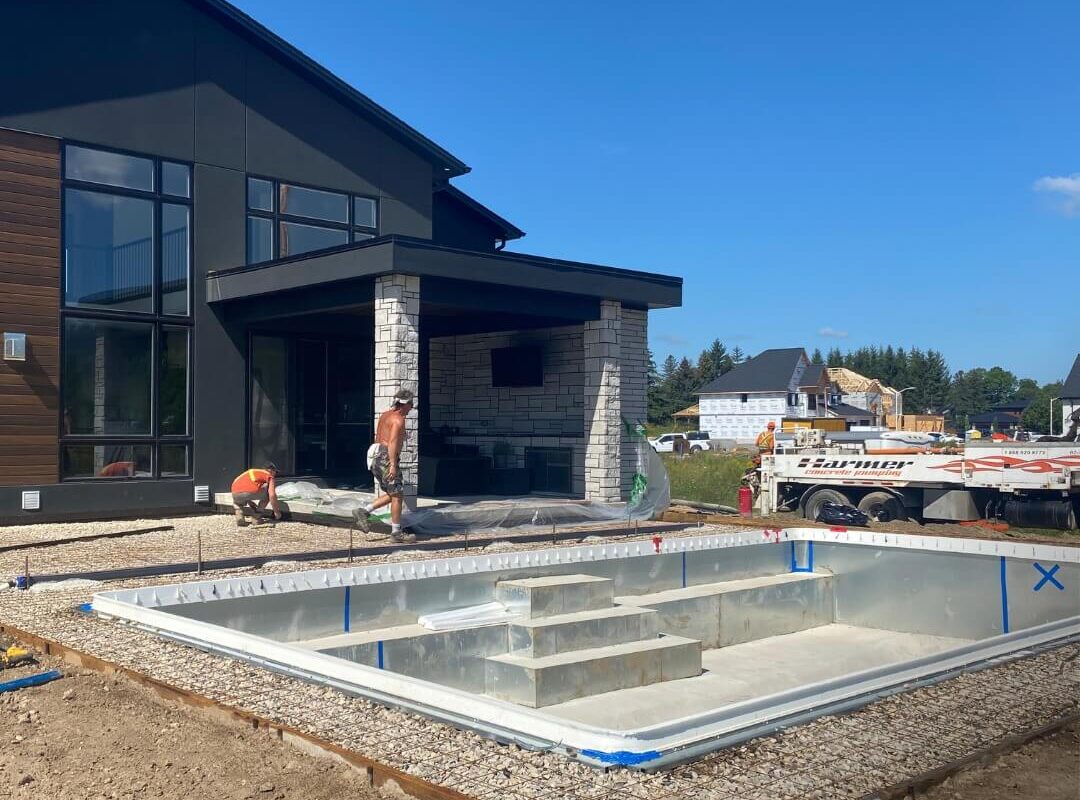
The concrete and heating specialists also need to coordinate insulation, reinforcement, joints, cable or tubing placement and testing. Heating does not correct an inadequate base, eliminate cracking or remove the need for proper curing. The startup date must follow the approved concrete and heating-system requirements.
Ask for the final layout and test records. Future drilling, anchors, saw cuts or repairs can damage embedded components if their locations are unknown.
When the Added Cost Makes Sense
A system deserves a closer look if shovelling is physically difficult, the driveway is steep, or reliable access is worth an ongoing expense to the household. Installing it during replacement avoids paying for a second major surface project later.
Partial coverage may reduce cost. A walkway, entrance or selected vehicle tracks can be priced separately, but unheated areas still need attention. Vehicle tracks do not automatically create a clear walking route from the car to the door.
For an economic comparison, subtract expected energy and maintenance costs from the snow-removal expense you would genuinely avoid. If that leaves no annual saving, there is no simple operating-cost payback. Convenience may still justify the purchase, but do not rely on an unsupported resale premium to make the numbers work.
Frequently Asked Questions
Will I still need a shovel or snow-removal service?
Possibly. Unheated edges, plough ridges, drifting snow and storms beyond the system’s design capacity may need separate attention. Keep a backup plan for power outages and equipment faults.
Does a hydronic system need maintenance?
Yes. The heat source, pumps, controls and heat-transfer fluid need checks appropriate to the equipment. Use the fluid specified for the system; automotive antifreeze is not a substitute.
Will a heated driveway prevent every slippery spot?
No. Runoff can refreeze outside the heated area, and the system can be overwhelmed or unavailable. Continue checking the surface and adjoining paths during winter weather.
Start With the Driveway and the Area You Need Heated
Measure the proposed heated area and note slopes, drainage problems, electrical capacity and available fuel service. Decide whether full coverage is necessary or whether a smaller area would solve the access problem.
Use Brosco Concrete’s quote form to discuss the concrete work and ask whether your proposed snow-melt installation can be accommodated, including any specialist coordination required. Confirm those responsibilities before booking the pour.