Why Is Your Driveway or Patio Sinking? What’s Really Happening Underneath: London, Ontario Homeowner’s Guide
A sinking driveway or patio usually doesn’t happen overnight. It starts with something easy to dismiss: a slight depression near the garage, a hairline crack along the edge, or a small puddle that didn’t used to be there. By the time it’s noticeable enough to worry about, the ground beneath has often been shifting for a while.
For homeowners in London and Southwestern Ontario, understanding what’s happening underneath the slab and acting before it gets worse can mean the difference between a straightforward repair and a full replacement
Why Concrete Sinks Over Time
Concrete sinks when the ground beneath it can no longer provide stable, even support. The slab itself is often still intact; the problem is what’s happening below it.
The most common causes include:
- Poor base compaction during the original installation
- Water erosion or drainage issues that wash away or soften the subgrade
- Freeze-thaw cycles, which cause the ground to expand and contract repeatedly over winter
- Subsurface voids, which form gradually as soil settles or shifts
- Heavy loads concentrated near the edges of the slab
- Tree roots or landscaping changes that disturb the soil over time
Warning Signs Your Slab Is Settling
The early signs of slab settlement are easy to overlook, but catching them early matters. Watch for:
- Water pooling in a specific spot after rain
- Cracks that are widening or growing more noticeable over time
- A raised lip or uneven edge where two sections meet
- Walkways, garage transitions, or steps that no longer align cleanly
- Sections that create a visible trip hazard
- Gaps forming along the edges or adjacent joints
 These symptoms suggest the slab is actively moving. The earlier they’re identified, the more repair options remain available and the less likely the situation is to escalate.
What Is Happening Underneath
When concrete sinks, the support below is typically failing in one of two ways.
The first is loss of material: water migrates soil out from beneath the slab, creating voids. The second is soil compression or shifting, where the ground simply compresses or moves and leaves sections of the slab unsupported.
Drainage often plays a role. If downspouts, grading, or surface runoff are directing water toward the slab, the soil beneath can soften and migrate more easily. In other cases, the issue goes back to the original installation of concrete placed on ground that wasn’t adequately prepared for long-term support.
What Are The Repair Options For A Sinking Driveway Or Patio?
The right repair depends on how much settlement has occurred and what caused it. Not every sinking slab needs to be torn out and replaced.
Common repair approaches include:
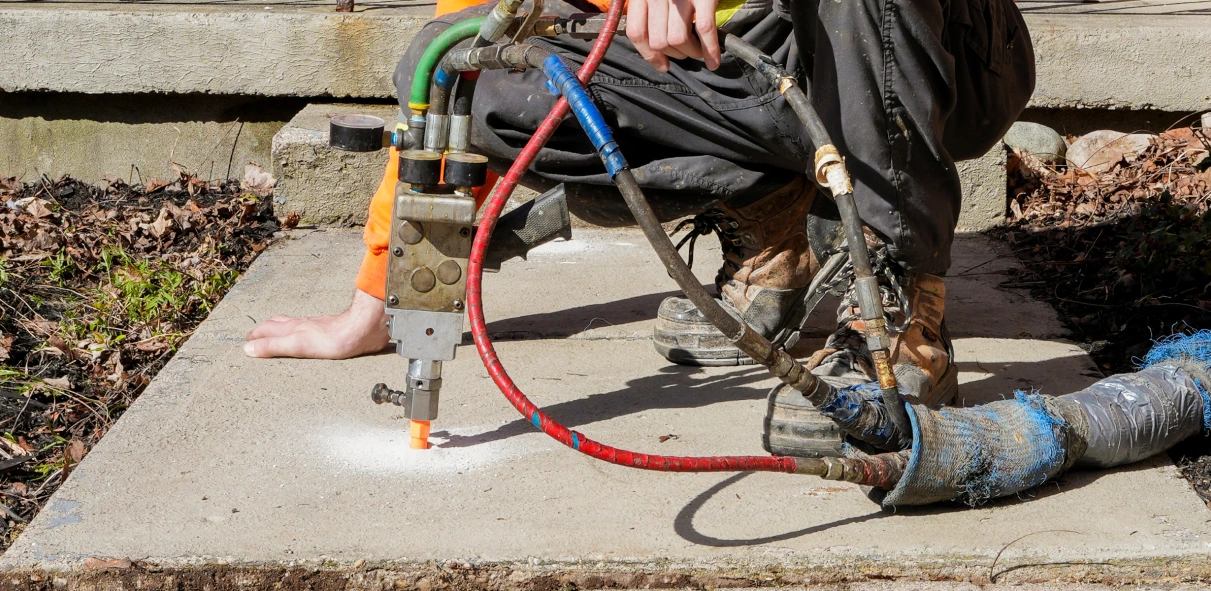
- Concrete leveling – used when the slab is still structurally sound but has settled unevenly
- Crack repair – addresses separation that is allowing water to enter and accelerate the problem
- Subgrade stabilization – used when the soil beneath needs to be reinforced before any surface work can hold
- Full replacement – appropriate when the slab is too compromised to restore safely
For most homeowners, concrete leveling is the logical starting point. It can correct an uneven surface without the disruption and cost of a full tear-out. That said, if the subgrade is the root cause, any repair plan needs to address that directly otherwise, the problem is likely to return.
When it comes to residential concrete work in London and Southwestern Ontario, Brosco Concrete brings hands-on experience, honest assessments, and a genuine commitment to getting the job done right. Whether you need a settled driveway leveled, a cracked patio repaired, or a full slab replaced, the team understands that every home is different and every repair deserves more than a one-size-fits-all answer. Homeowners choose Brosco Concrete because they get clear communication from the first call, a repair plan that actually addresses the root cause, and work carried out by people who take pride in their craft. No upselling, no unnecessary replacements, just straightforward advice and quality results that hold up through London’s demanding seasonal conditions.
Why London, Ontario Homeowners Shouldn’t Wait
If your driveway or patio is showing early signs of sinking, a professional assessment is the right first step. A qualified concrete pouring contractor can determine whether the issue is minor settlement, active movement, drainage-related, or an indication of deeper subgrade failure.
A thorough assessment should answer:
Is the slab still structurally usable?
Is the sinking contained or spreading to adjacent sections?
Is water contributing to the movement?
Would leveling solve the issue, or is stabilization required first?
Is repair the most practical option, or has the damage progressed to the point where replacement is more realistic?
The earlier the cause is identified, the easier it is to choose the right fix and the better the chances of a result that holds.
Frequently Asked Questions
What causes a driveway to sink?
A driveway typically sinks when the soil or base beneath it shifts, erodes, or compresses over time. The most common contributing factors are poor drainage, seasonal freeze-thaw cycles, and inadequate base preparation during the original installation.
How can you stop a driveway from sinking?
Preventing further settlement usually involves addressing the root cause improving drainage, stabilizing the subgrade, and repairing any settled sections before the movement spreads. Routine inspection after wet seasons or harsh winters can help catch issues early.
How do you fix a sinking driveway?
The repair approach depends on the cause and severity of the settlement. If the slab is still structurally sound, concrete leveling is often the most efficient solution. More significant cases may require subgrade stabilization or, in severe situations, full replacement.
What is the average lifespan of a concrete driveway?
A properly installed concrete driveway can last for decades. Longevity depends on the quality of the base, local drainage conditions, weather exposure, and how proactively maintenance issues are addressed over time.
What is the cost to repair a sinking driveway?
Repair costs vary depending on the size of the affected area, the extent of settlement, and the type of repair required. A professional on-site assessment is the most reliable way to get an accurate estimate.
Is concrete leveling better than replacement?
Concrete leveling is better suited for slabs that are still structurally intact but have shifted unevenly, while replacement is more appropriate when the slab is too damaged or unstable to restore. A professional assessment can help determine which option makes sense for a specific situation.
Protect Your Home, Start Early
A sinking driveway or patio is a manageable problem, but only if it’s addressed before the damage compounds. With the right repair approach and the right timing, it’s possible to restore the surface, eliminate the safety hazard, and protect the concrete around it.
If you’re seeing early signs of settlement on your driveway or patio in London, Ontario or Southwestern Ontario, contact Brosco Concrete to get an assessment and find out what your repair options actually look like.