There is no single outdoor temperature that makes every concrete pour safe or unsafe in London, Ontario. Concrete can be placed in freezing weather with a suitable cold-weather plan, but fresh concrete must be kept at the required temperature and protected while it gains strength. A mild afternoon alone is not enough to approve the job.
As forecasts approach 5°C or include overnight frost, ask the contractor about cold-weather precautions. Ontario industry guidance hosted by Dufferin Concrete uses 5°C air temperature, or a likely drop below it within 24 hours, as a cold-weather planning trigger. It is not a universal minimum pouring temperature. The base, concrete temperature, mix and protection available after finishing all matter.
Air Temperature and Concrete Temperature Are Different
The weather app reports air temperature. Concrete arrives with its own temperature, then gains and loses heat according to the mix, ground, wind, exposure and protection.
A warm load placed onto frozen ground can still be a poor decision. Concrete placed during a cool day may perform well if the base is suitable and the crew maintains the required curing conditions.
For an outdoor slab in London, the team needs to consider more than the forecast at delivery time:
- overnight lows during the protection period
- ground and form temperatures
- wind exposure and moisture loss
- slab thickness and exposed edges
- available insulation, heating and temperature monitoring
The crew must be able to maintain the planned conditions. If they cannot protect the concrete reliably, postpone the pour.
What Temperature Should Concrete Be When Placed?
The National Ready Mixed Concrete Association’s CIP 27 cold-weather guidance recommends placement temperatures based on the minimum dimension of the concrete section. For sections under 300 mm thick, its recommendation is 13°C as placed. For sections from 300 to 900 mm, it recommends 10°C.
Those figures apply to the concrete itself, not the outdoor air.
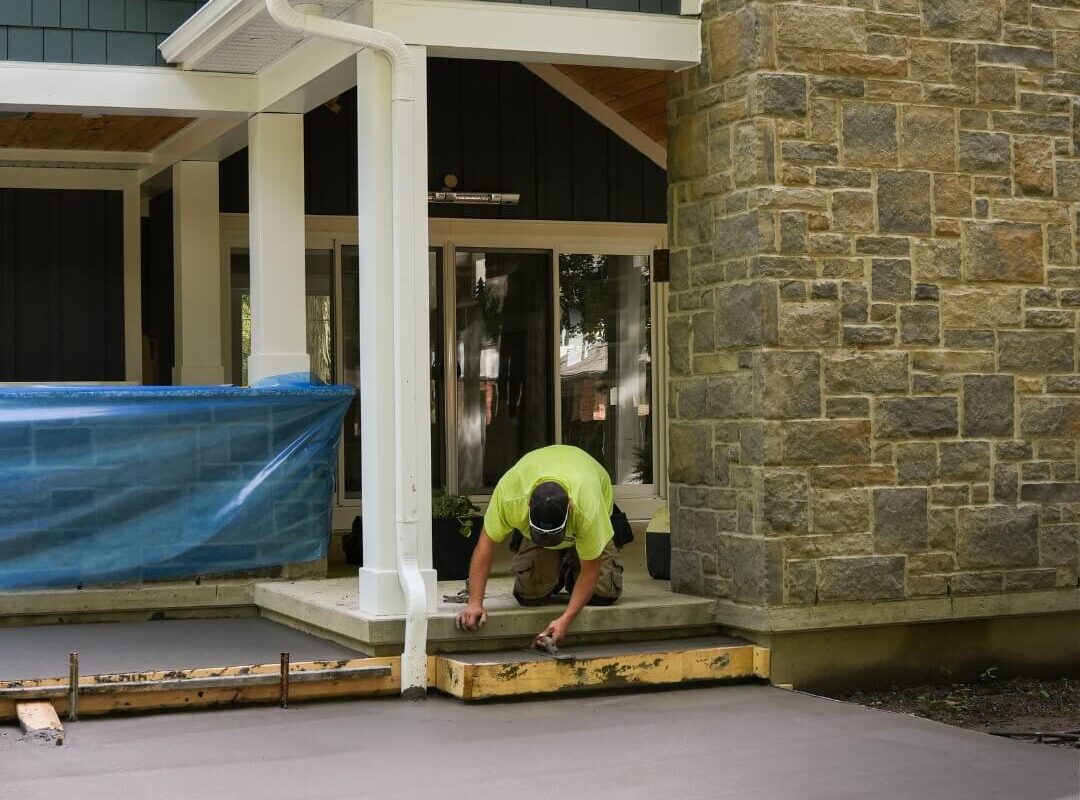
A typical thin slab loses heat differently from a large, thick concrete element. Corners and exposed edges need particular attention because they lose heat quickly.
CIP 27 is general industry guidance, not the specification for every Ontario project. The contractor and ready-mix supplier should confirm the applicable Canadian requirements, exposure conditions and project specifications, with the designer or engineer where required. Ask what temperature will be checked at placement and how the concrete will be kept within the required conditions afterward.
Why Early Freezing Can Damage Concrete
Concrete gains strength through hydration, the reaction between cement and water. Lower temperatures slow that reaction. Freezing before sufficient strength has developed can damage the material.
CIP 27 says fresh concrete can freeze at about -4°C and should be protected from freezing until it reaches at least 3.5 MPa compressive strength. Do not treat that figure as permission to let fresh concrete approach -4°C. The placement and protection plan should keep it at the required curing temperature, well clear of freezing.
The 3.5 MPa threshold is not a general return-to-service target. It does not show that a slab is ready for vehicles, forklifts or other design loads.
Repeated freezing and thawing while wet creates a different exposure. CIP 27 calls for air-entrained concrete where appropriate and protection from early freeze-thaw cycles until adequate strength has developed. The required protection and strength need to match the actual project.
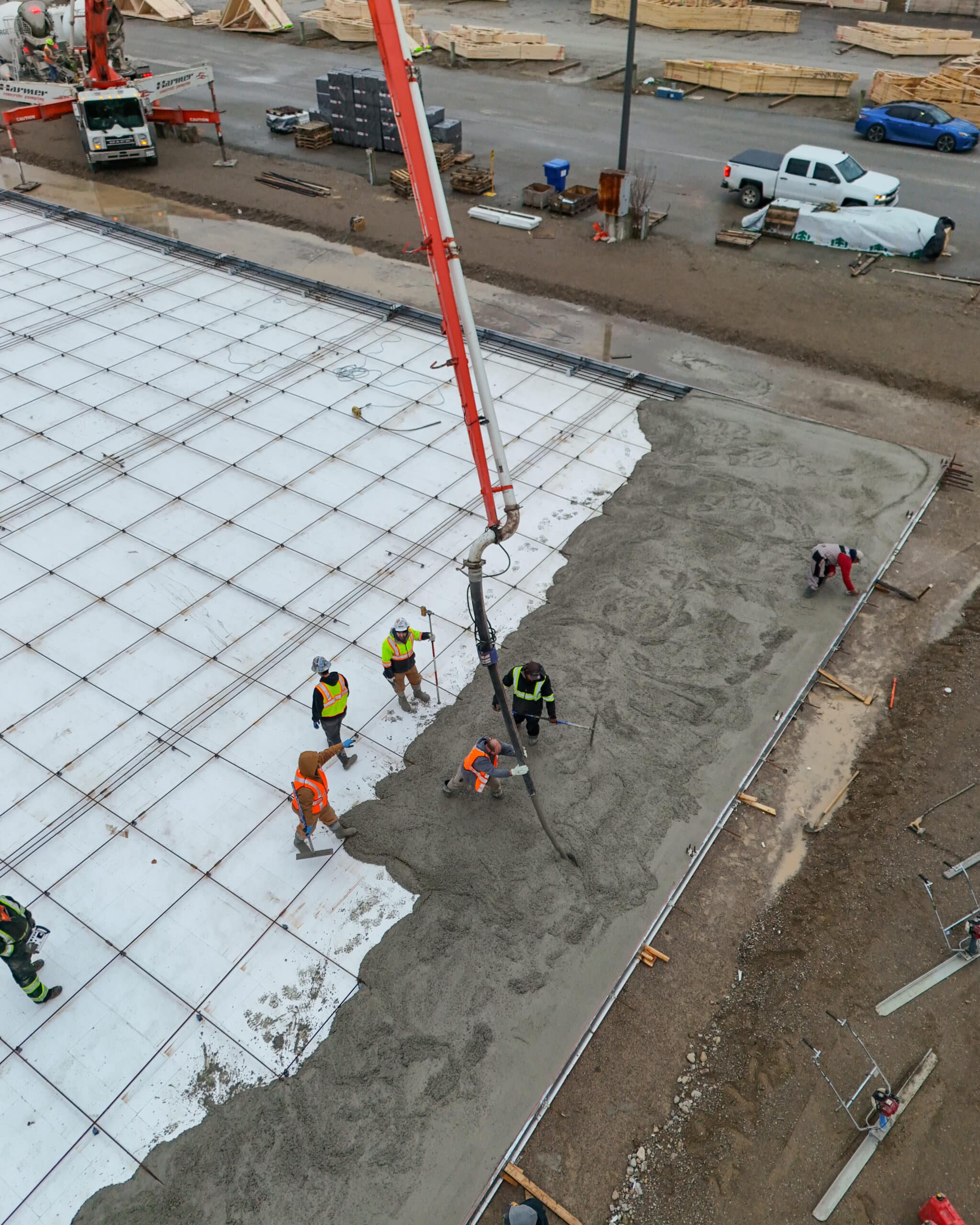
Prepare the Ground Before the Truck Arrives
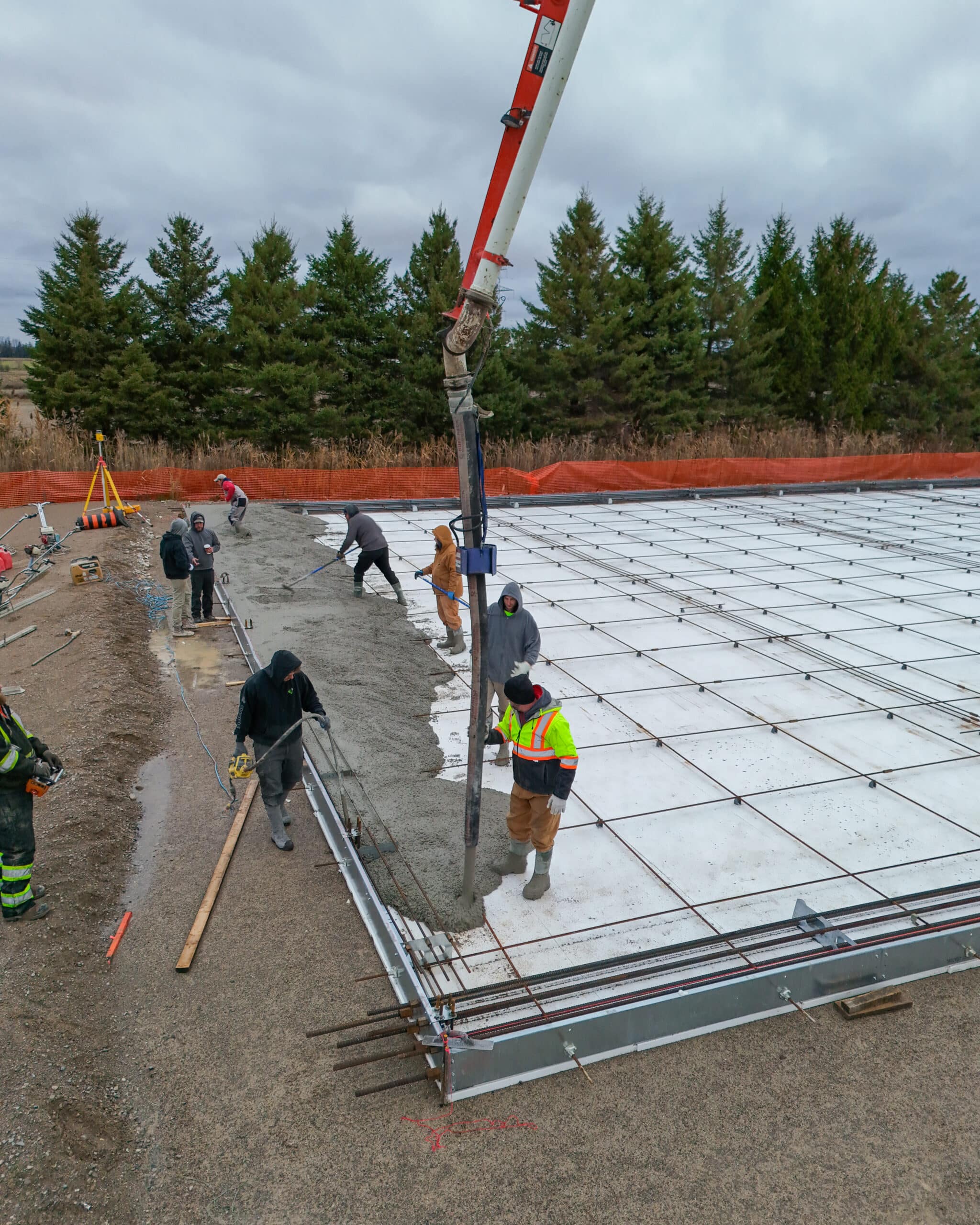
Do not place concrete on frozen ground, snow or ice. CIP 27 calls for contact surfaces to be above freezing and free of snow and ice before placement. The Ontario guidance hosted by Dufferin calls for forms, subgrades and reinforcing steel to be at least 5°C before placement. Confirm the requirements for the job rather than treating a barely thawed surface as sufficient.
Heating the concrete mix does not correct a frozen base. Ground preparation needs its own plan, including any thawing and protection required before the pour. A surface that appears thawed also needs assessment for conditions below it.
For a commercial floor, equipment pad or agricultural slab, preparation can affect the construction schedule well before concrete delivery. Access, excavation, base work, forms and embedded items all need coordination.
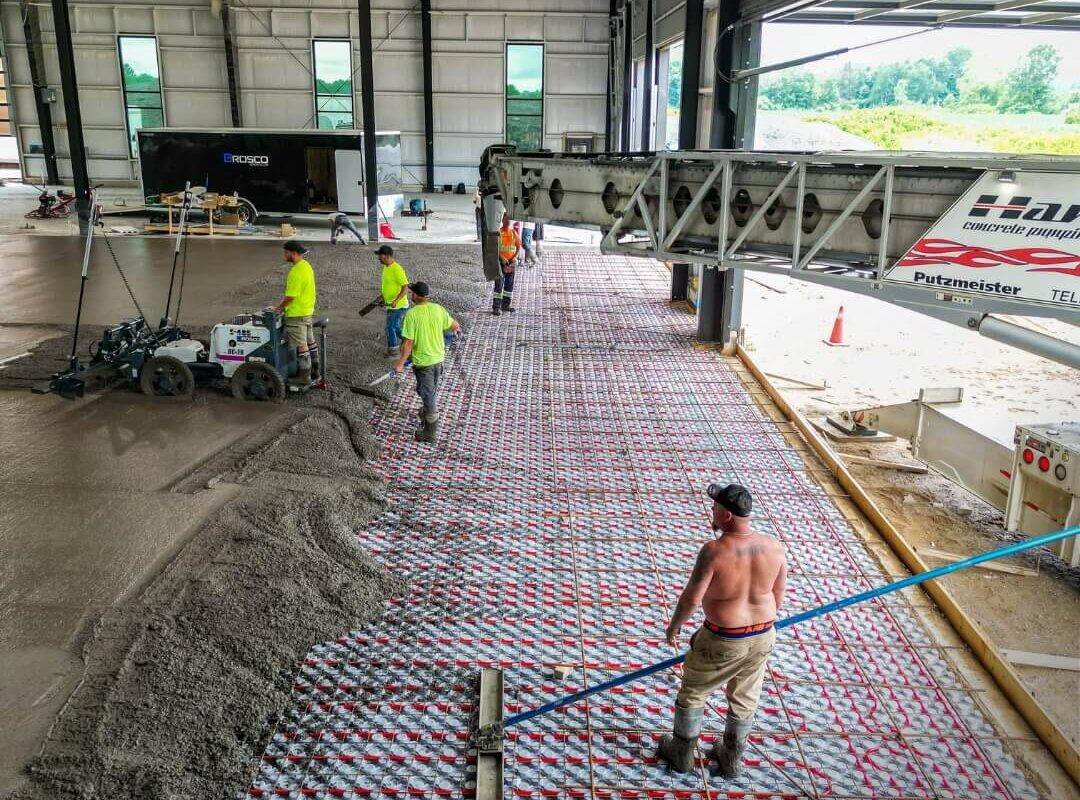
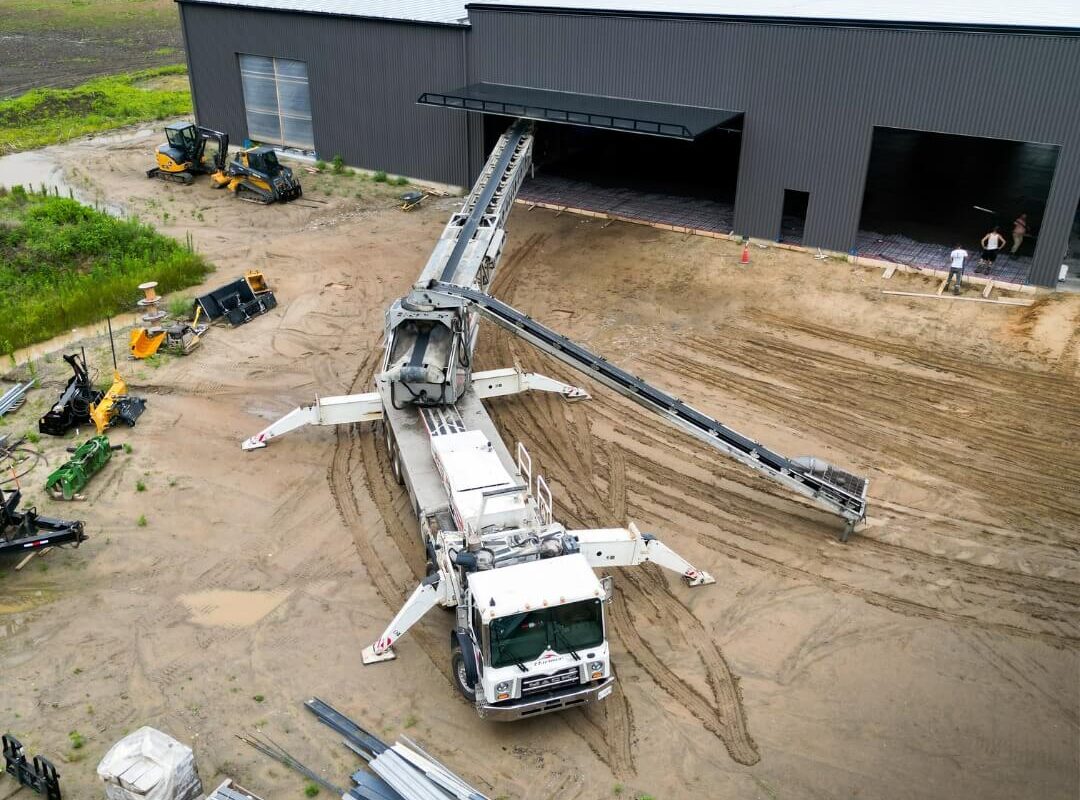
Brosco’s commercial concrete finishing work includes applications such as warehouse floors and agricultural pours. Schedule these projects around suitable site conditions and the required protection period, not the first available truck slot.
Protection Continues After Finishing
Cold-weather work continues after finishing.
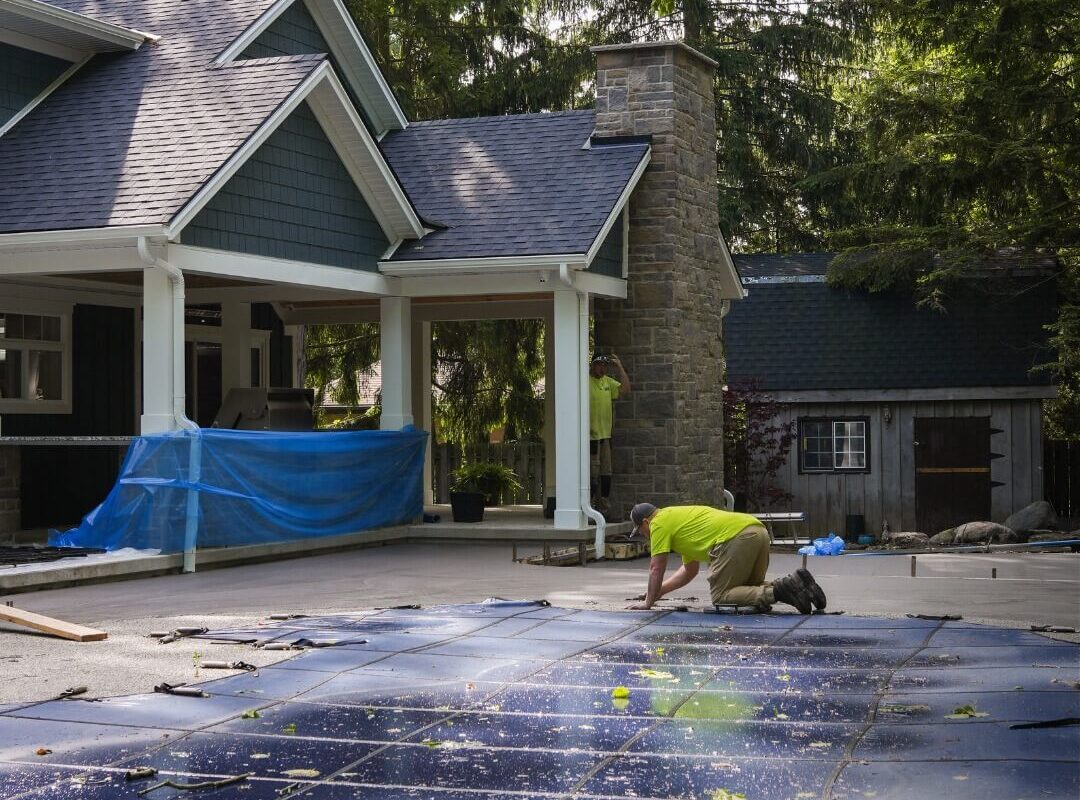
Depending on the conditions, a protection plan may use insulating blankets, insulated forms or a heated enclosure. The choice needs to account for the slab, forecast and duration of protection. Blankets help retain heat; they do not guarantee adequate temperature under every set of conditions.
Ask who will check temperatures overnight and what happens if the forecast worsens. On an active site, also establish who will keep vehicles, deliveries and other trades off the protected area.
Curing must control moisture as well as temperature. CIP 27 advises against water curing when freezing temperatures are imminent and identifies other curing methods for those conditions. The selected method must also suit the intended finish or later coating.
Protection should be removed in a controlled way. Abrupt cooling can create harmful temperature differences within the concrete. The crew should decide when and how to remove blankets or heating based on the protection plan, rather than uncovering the slab simply because the next afternoon feels warmer.
Do Accelerators Make Winter Pouring Safe?
Accelerating admixtures can help concrete set and gain strength sooner, but they do not make it freeze-proof. NRMCA explicitly states that accelerators do not replace curing and protection from freezing.
Mix changes belong with the ready-mix producer and project team. Reinforcement, exposure and specification requirements affect what can be used. An additive selected for one job may be unsuitable for another.
Avoid treating extra water as a convenient way to make a cold-weather load easier to finish. CIP 27 notes that added water can delay setting and prolong bleeding. Any site adjustment needs to stay within the approved mix and supplier’s instructions.
Heated enclosures need a safety plan too. Fuel-burning heaters must be properly vented and used in accordance with site safety requirements. Exhaust can endanger workers, and direct exposure to combustion gases can damage a fresh concrete surface.
When Is Delaying the Pour the Better Decision?
A cold-weather pour needs enough time, equipment and supervision to protect the work. Delay deserves serious consideration when:
- the base remains frozen or cannot be prepared properly
- the forecast exceeds the protection system’s capacity
- insulation or heating equipment is unavailable
- nobody can monitor the concrete through the required period
- the site must reopen before sufficient strength can be demonstrated
Compare prices that include cold-weather preparation, protection, monitoring and the return-to-service schedule. A lower quote can cost more if it leaves those items out.
For commercial or agricultural work, tell the contractor what loads will use the slab and when. A calendar date alone cannot prove that concrete has developed the required strength. The project team may need testing or another accepted strength-assessment method before loading it.
Frequently Asked Questions
Can concrete be poured when the air is below 0°C?
Sometimes, with suitable preparation, mix control and continuous protection. The crew must be able to maintain the specified concrete conditions. Below-freezing air is not permission to place concrete on a frozen base.
Is 5°C too cold to pour concrete?
Not automatically. It is a reason to plan for cold-weather conditions, especially if overnight frost is expected. Check the concrete placement temperature, base condition and protection plan.
Will covering the slab overnight be enough?
That depends on the mix, thickness, forecast, insulation and required strength. Protection may need to continue beyond one night. Ask how temperature and strength will be assessed.
Plan the Pour Around the Whole Forecast
For a London concrete project, ask how the crew will prepare the site, place the concrete and protect it afterward. Ask for the full plan, including the conditions that would delay the pour.
Use Brosco Concrete’s free quote form to share your project location, intended use and schedule. The team can assess the work and discuss whether cold-weather placement or a later pour makes more sense for your site.