What this article covers: A complete spring concrete driveway inspection checklist for Ontario homeowners,what damage to look for after winter, how to tell if you need repairs or full replacement, and when to call a professional concrete contractor.
Key Takeaways:
- Ontario’s freeze-thaw cycles are the #1 cause of concrete driveway damage — and spring is when the full extent of that damage becomes visible
- The 5 things to inspect: surface cracks, spalling and scaling, pooling water, uneven slabs, and edge deterioration
- Minor hairline cracks are normal; structural cracks wider than 6mm, significant spalling, and heaving slabs are signs you need a professional
- Repairs done early in spring cost significantly less than emergency replacements in peak summer
- Brosco Concrete offers free spring inspections across Southwestern Ontario — London, Windsor, Kitchener, Hamilton, and surrounding cities
The snow is finally gone. You walk outside one morning with your coffee, glance down at your driveway, and your stomach drops a little.
Was that crack there before winter? Is that section always that uneven? Why does that corner look like it’s been flaking off?
Ontario winters are genuinely brutal on concrete, and spring is the season when your driveway tells the truth about what just happened to it over the last five months.
The good news: catching problems now, before they get worse, and before every concrete contractor in Southwestern Ontario is fully booked, can save you thousands of dollars and a whole lot of stress.
This guide walks you through exactly what to look for, what it means, and what to do about it.
Why Ontario Winters Hit Concrete So Hard
Before we get into the checklist, it helps to understand why this happens, because once you do, you’ll never ignore a small crack again.
A freeze-thaw cycle occurs when temperatures fluctuate around the freezing point, dropping below zero at night and rising above it during the day. The damage begins when water enters small pores or cracks in the concrete.
When temperatures drop, the water freezes and expands, putting pressure on the surrounding material.
When it thaws, it contracts, leaving room for more water to enter.
Each cycle chips away at the structural integrity of the slab from the inside out.
And in Ontario, this isn’t a once-or-twice-a-winter event, Ontario’s climate creates the perfect conditions for freeze-thaw damage, with frequent freeze-thaw cycles during the shoulder seasons, high humidity and precipitation in fall and early spring, and salt and de-icing agents that increase water penetration and accelerate deterioration.
Add the road salt and de-icers most of us used this winter, and you’ve got a recipe for accelerated wear.
Water expands by about 9% when it freezes, and the forces produced can amount to several thousand pounds per square inch when this occurs inside the tiny pores and capillaries of concrete, pushing the material apart from the inside, like thousands of tiny wedges working together.
The damage doesn’t always show up immediately.
Some of it is only visible once the ice and snow pack have fully melted, which is exactly why a proper spring inspection matters.
Your Complete Spring Driveway Inspection Checklist
Grab your phone to take photos as you go. Documenting what you find now gives you a useful baseline and makes it much easier to describe the damage when you call a contractor.
1. Surface Cracks: The Most Common Warning Sign
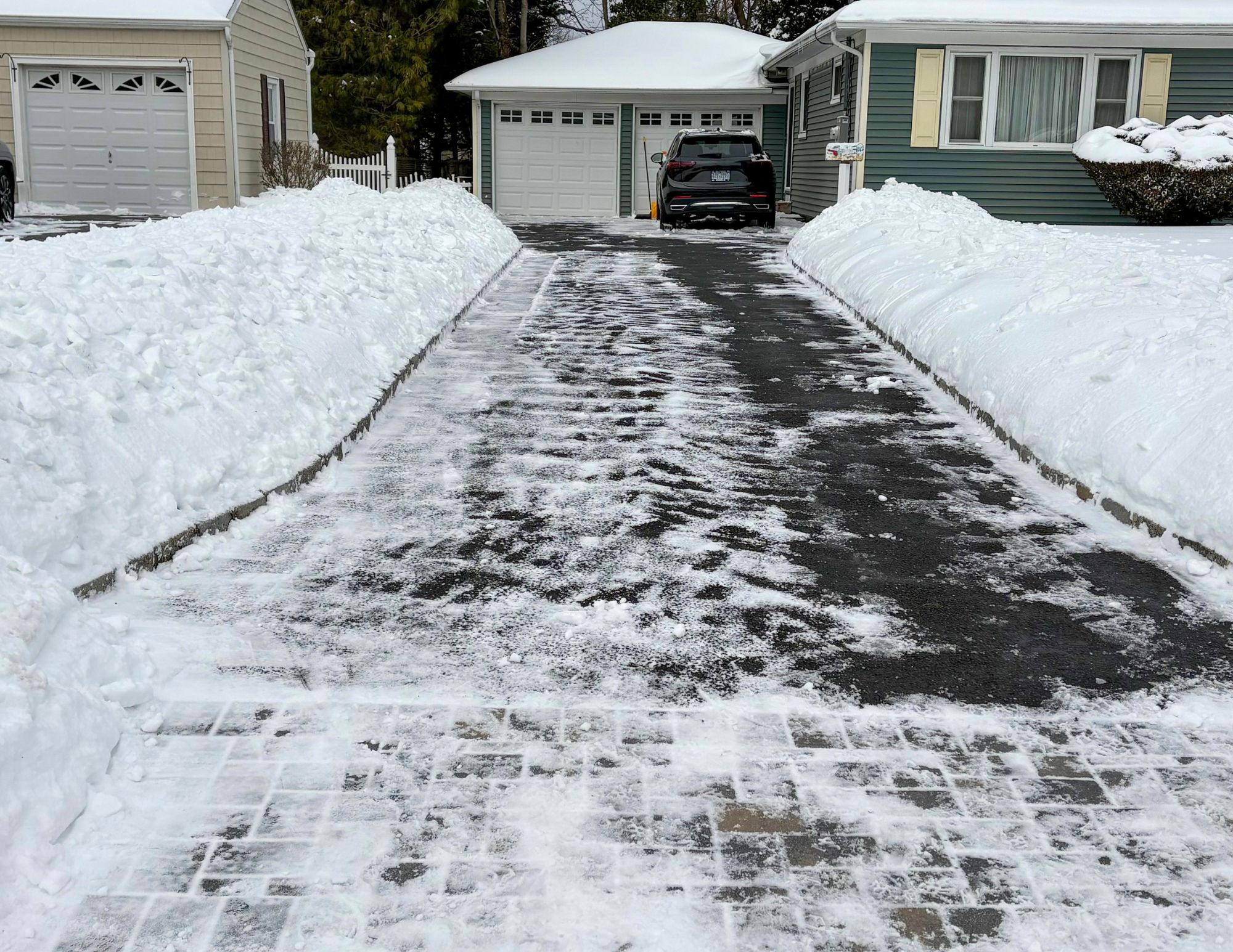
Walk the entire length of your driveway slowly, looking at the surface from multiple angles. Natural light helps, try inspecting in the morning when shadows are longer.
What you’re looking for:
- Hairline cracks (less than 3mm wide): These are common in concrete and can be monitored. Seal them before next winter to prevent water infiltration.
- Structural cracks (wider than 6mm, or cracks you can fit a pencil into): These indicate deeper movement in the slab or subbase and need professional assessment.
- Spider web / map cracking (also called crazing): A network of fine cracks spreading across the surface. This often signals surface scaling from freeze-thaw stress and requires professional attention before the pattern spreads.
- Linear cracks running across the full width of the driveway: These can indicate slab movement or poor original installation and should be evaluated by a professional.
Why it matters: Even hairline cracks can expand when temperatures drop and moisture freezes. What’s a simple crack seal this spring can become a full slab replacement next year if left untreated.
Not sure if your cracks are cosmetic or structural?
Book a free spring inspection with Brosco Concrete and get a professional assessment at no cost.
2. Spalling and Scaling: The Flaking Surface
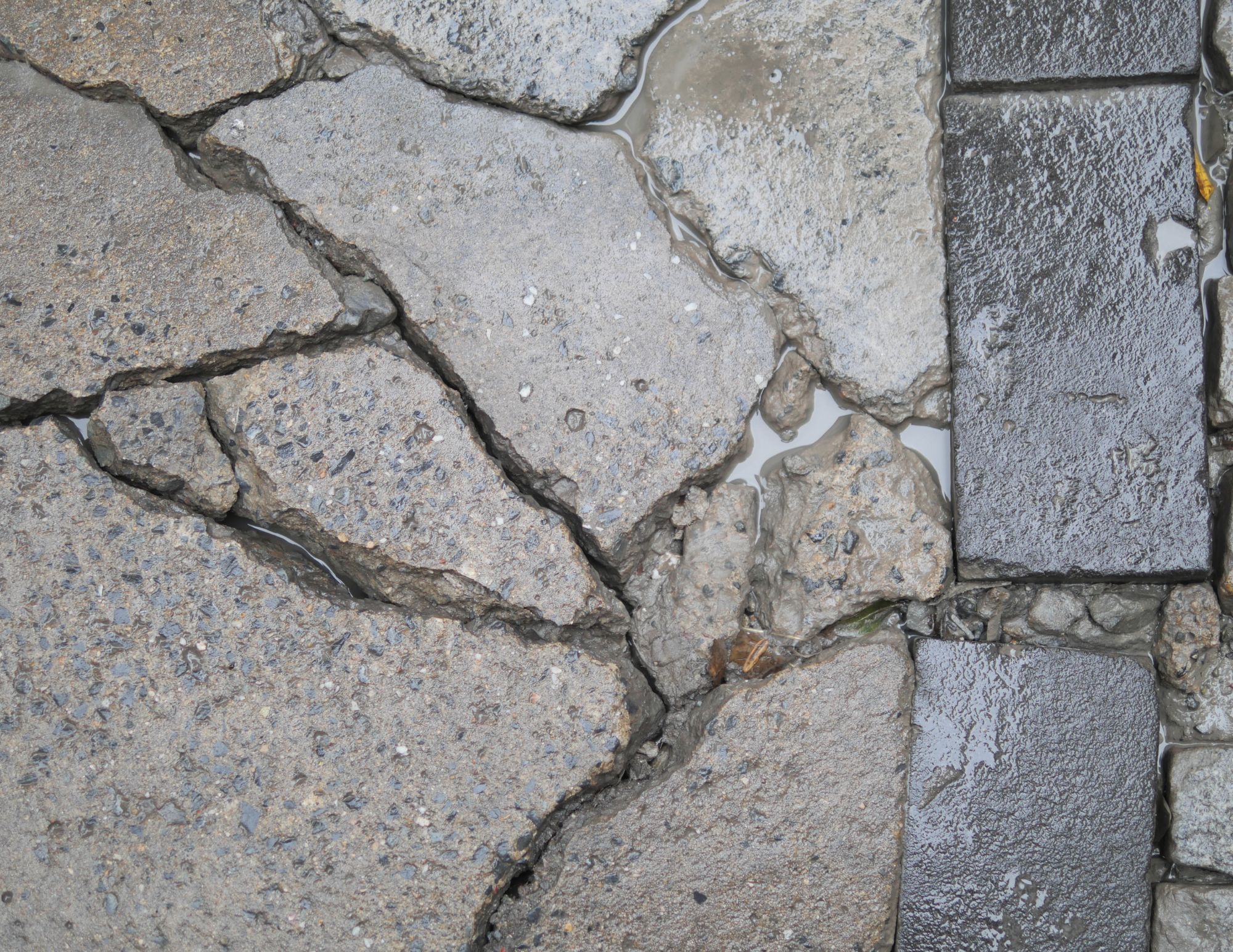
Look closely at the texture of your driveway surface. Does it look smooth and intact, or is the top layer pitting, flaking, or peeling away?
Spalling is when chunks or layers of concrete break off, exposing the aggregate underneath. Scaling is the progressive flaking of the surface layer, often starting as a rough, pitted texture.
When water seeps into the concrete and freezes, it expands, leading to cracks and surface flaking.
De-icing salts significantly accelerate this process by drawing moisture deeper into the concrete than it would naturally penetrate.
Signs of spalling to watch for:
- Rough, pitted surface where the driveway used to be smooth
- Loose aggregate (small stones) appearing on the surface
- Flakes or chips of concrete in the area near the driveway
- Discolouration or rust-coloured staining (which can indicate rebar corrosion beneath the surface)
A common mistake is assuming that spalling is purely cosmetic.
That might be true at first, but once reinforcing steel starts expanding from moisture exposure, the damage turns structural quickly.
Concrete spalling repair costs $3 to $5 per square foot for surface-level work, but if more than 25% of the driveway is damaged, resurfacing or full replacement becomes more cost-effective. The earlier you catch it, the cheaper the fix.
Seeing flaking or rough patches on your driveway surface? Contact Brosco Concrete — we’ll tell you honestly whether you need a patch, a resurface, or a full replacement.
3. Pooling Water: A Drainage Problem You Can’t Ignore
On a dry day after rain, walk your driveway and look at how water behaves. Does it drain off cleanly toward the street or yard? Or does it collect in depressions?
What to look for:
- Low spots or bowls where water visibly collects after rain
- Wet patches on the driveway surface that take much longer to dry than the surrounding areas
- Water pooling near the foundation of your home is a serious warning sign of drainage failure
- Staining or efflorescence (white mineral deposits) indicating chronic moisture exposure
As snow and ice melt in the spring, excess moisture can lead to issues such as erosion and soil instability beneath the driveway, causing uneven surfaces or even structural damage.
Pooling water isn’t just a surface annoyance. It means the next winter’s freeze-thaw cycles will have a ready supply of moisture sitting on or in your slab, accelerating the very damage you’re trying to prevent.
Noticing pooling water or drainage issues? Book a free spring inspection with Brosco Concrete, we assess drainage as part of every evaluation.
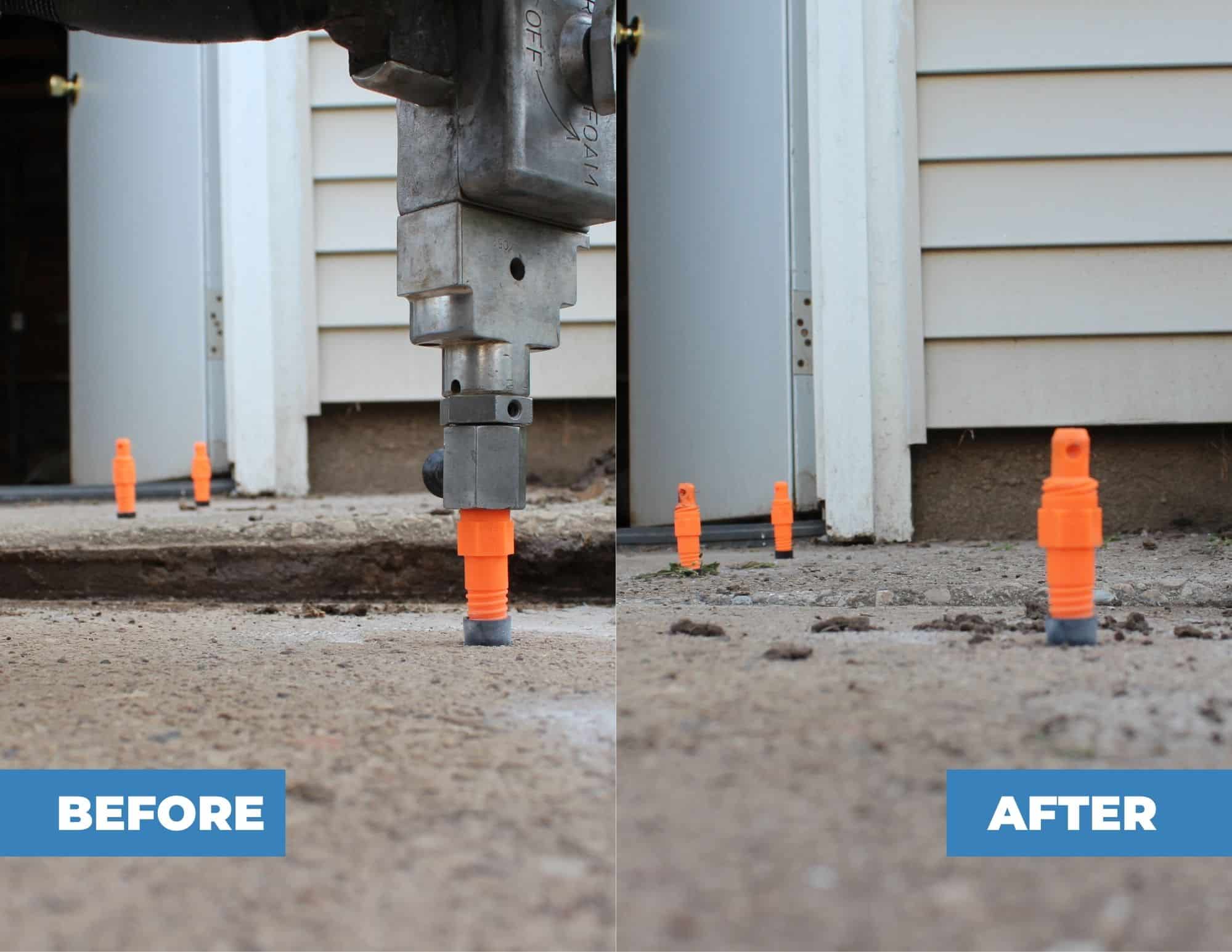
4. Uneven Slabs and Heaving: A Safety Hazard
Walk the driveway carefully and pay attention to any change in level between sections. Run your foot along expansion joints and control joints (the lines cut into the concrete). Any lip or raised edge?
What to look for:
- One slab section visibly higher or lower than the adjacent one
- A “step” at any joint that you can feel underfoot or trip on
- Sections that feel soft, hollow, or slightly springy when you walk on them (indicates voids beneath)
- Cracks accompanied by one side being higher than the other (differential settlement)
When the ground freezes, it expands, a process called frost heave. If the soil under one section of your driveway freezes faster than the rest, it pushes that section upward.
When it thaws, the slab doesn’t always settle back into its original position, leaving a permanent unevenness.
Driveway leveling costs $600 to $1,200 to lift a small sinking section, or $1,400 to $2,700 to level an entire driveway, but more importantly, uneven slabs are a genuine trip and fall hazard, especially for children and older family members.
If you find more than 12mm of height difference between slabs, treat this as urgent.
Uneven slabs or heaving concrete? Reach out to Brosco Concrete, we’ll assess whether lifting, leveling, or replacement is the right call.
5. Edge and Border Deterioration: The First Things to Go
The edges of your driveway — where the slab meets the lawn, garden bed, or road — are the most vulnerable to winter damage. Check them carefully.
What to look for:
- Chipping, crumbling, or breaking edges along the border of the slab
- Sections of edge that have broken completely away
- Cracks running along the length of the driveway near the edges (longitudinal cracks)
- Exposed aggregate at the edge where the surface has been worn away
Edge deterioration looks cosmetic but often isn’t. Even small cracks can widen during spring’s moisture cycle, and damage that starts or gets significantly worse each spring points to freeze-thaw as the primary cause.
Left unaddressed, edge crumbling spreads inward and can compromise the structural integrity of the whole slab within a few seasons.
The Repair vs. Replace Decision Guide
You’ve done the inspection. Now the real question: do you repair what’s there, or is it time for a new driveway installation?
Here’s an honest framework that Brosco Concrete uses when evaluating driveways across Southwestern Ontario:
| What You Found | Recommended Action |
| Hairline cracks only, no spalling | Seal cracks, apply sealer. Monitor annually. |
| Cracks under 6mm, minor surface roughness | Professional crack repair + resurfacing |
| Spalling covering less than 25% of surface | Concrete resurfacing |
| Multiple structural cracks, significant spalling | Replacement consultation needed |
| Heaving slabs, differential settlement | Slab lifting assessment or replacement |
| Pooling water + cracking + spalling | Full replacement strongly recommended |
| Driveway over 25–30 years old with multiple issues | Replacement is almost always more cost-effective |
Minor repairs in Ontario, crack filling and edge patching, typically run $500 to $1,200 for small areas. Repairing or resurfacing larger driveways can climb into the thousands depending on size and condition.
In most cases, a new concrete driveway installation in Southwestern Ontario, done right, with proper base preparation and a quality mix, will outlast a series of patch repairs at a better long-term cost.
The general rule of thumb: if more than 30% of the surface is damaged or cracked, replacement is almost always the smarter investment.
Not sure where your driveway falls?
Book a free spring inspection with Brosco Concrete and get an honest, no-pressure assessment from a local concrete contractor who knows Southwestern Ontario driveways.
When to Call a Professional Right Away
Some things you can monitor. Others need a call today. Contact a qualified concrete contractor in Ontario immediately if you see:
- Cracks wider than 12mm – These are structural, not cosmetic
- Any slab heaving more than 25mm – This is a trip hazard and liability issue
- Water pooling near your home’s foundation – This can affect basement integrity
- Rust-colored staining near cracks – Indicates rebar corrosion inside the slab
- Large sections of concrete that have broken away – The subbase may be compromised
Small cracks caused by winter can quickly worsen without timely intervention, early action prevents costly repairs and preserves your property value.
Why Spring Is the Right Time to Act
Here’s something most homeowners don’t realize: spring isn’t just the best time to inspect your driveway, it’s the best time to book your concrete project for the year.
Concrete contractors book up fast in spring as demand surges, homeowners who get quotes early secure better scheduling and often better rates before peak-season pricing kicks in.
Concrete also cures best in moderate spring temperatures. The ideal range is 10°C to 25°C, which corresponds almost perfectly with the Southwestern Ontario spring window from late April through early June.
Too hot and the surface cures too fast, creating shrinkage cracks. Too cold and strength development slows significantly.
In other words: if you want a new concrete driveway, patio, or stamped concrete project installed this year, the decisions you make in March and April determine whether it happens in May or whether you’re waiting until fall.
Frequently Asked Questions
How often should I inspect my concrete driveway in Ontario? At minimum, twice a year, once in spring (after the freeze-thaw season) and once in fall (before winter). Spring is the critical inspection because it reveals the cumulative damage from the winter just passed.
Can I do a concrete driveway inspection myself? Yes, and this checklist gives you everything you need for a solid DIY inspection. That said, a professional eye catches things a homeowner often misses, particularly early-stage spalling, subsurface voids, and drainage issues. Brosco Concrete offers free spring inspections, there’s no downside to having a professional confirm your findings.
Is it worth sealing my concrete driveway every year? Not necessarily every year, but sealing every 2 to 3 years is a good practice for Ontario driveways. According to the Portland Cement Association, a quality penetrating sealer significantly reduces water absorption and extends the life of your concrete, particularly in climates with heavy freeze-thaw cycling.
How long does a concrete driveway last in Ontario? A well-installed concrete driveway in Ontario typically lasts 25 to 40 years with proper maintenance, including sealing, crack management, and avoiding harsh de-icing chemicals. Regular inspection and maintenance help identify potential problems early and keep your concrete driveway in top condition despite the weather challenges in Southern Ontario.
What’s the difference between concrete resurfacing and replacement? Resurfacing applies a new layer of concrete or overlay over your existing slab and is suitable when the structural integrity is sound but the surface is worn, cracked, or spalled. Replacement involves removing the existing slab entirely, repairing the subbase, and pouring fresh concrete, required when the existing slab has structural damage, heaving, or widespread cracking. Your contractor will tell you which applies after inspection.
Should I repair or replace my driveway if it’s 20 years old? It depends on the condition, not just the age. A 20-year-old driveway with minor cracking and good structural integrity can be resurfaced. One with widespread spalling, heaving, and drainage problems is almost always better replaced. Get a professional assessment before spending money on repairs that won’t last.
What de-icing products are safest for concrete driveways in Ontario? Avoid rock salt and ammonium sulphates, which damage concrete surfaces. Safer options include sand, kitty litter, or magnesium chloride for traction and ice control. Calcium chloride is effective but should be used sparingly and rinsed off in spring.
How soon after winter can new concrete be poured? In Southwestern Ontario, conditions are generally suitable for new concrete installation from late April onward, once overnight temperatures are consistently above 5°C. Spring pours in May and early June are ideal, temperatures are moderate, humidity is manageable, and curing conditions are excellent.
Why Brosco Concrete Is Southwestern Ontario’s Choice This Spring
If there’s one takeaway from this checklist, it’s this: the homeowners who act in spring, who book early, get an honest assessment, and make a plan, always come out ahead. They get better scheduling, better pricing, and a summer spent actually enjoying their driveway instead of worrying about it.
Brosco Concrete has been serving homeowners across Southwestern Ontario, London, Strathroy, St. Thomas, and beyond, with residential concrete driveways, stamped concrete patios, exposed aggregate driveways, concrete steps, and walkways. Every project starts with an honest conversation, not a hard sell.
The team at Brosco understands Ontario winters because they live here too.
They know what freeze-thaw cycles do to a driveway. They know the difference between a slab that needs a patch and one that needs to come out.
And they’ll tell you the truth, even if the truth is “your driveway is fine, come back in two years.”
This spring, they’re offering free driveway inspections for homeowners in Southwestern Ontario. No cost, no obligation, no pressure. Just a professional set of eyes on your concrete and a clear, honest answer about what, if anything, you should do next.
Spring slots fill fast. If you’ve read through this checklist and found anything that concerned you, or even if you just want peace of mind, now is the time to act.
Book your free spring driveway inspection with Brosco Concrete today.