When a concrete slab settles, price is usually one of the first questions. Cost matters, but commercial, industrial, agricultural, and municipal property owners in Southwestern Ontario also need to consider the slab, subgrade, traffic demands, and acceptable downtime.
Polyurethane foam and mudjacking can both lift and stabilize settled concrete. The materials behave differently below the slab, which affects how each method fits the site.
What Each Method Is Actually Doing
Both methods address a slab that has lost support, settled unevenly, or developed voids beneath it. Crews inject material below the concrete to fill space and move the slab back toward the required elevation.
Mudjacking
Traditional mudjacking, also called slab jacking, uses a pumped grout mixture below the slab. Missouri DOT guidance describes it as a grout-based process used to fill voids and raise settled concrete pavement slabs.
Polyurethane foam lifting
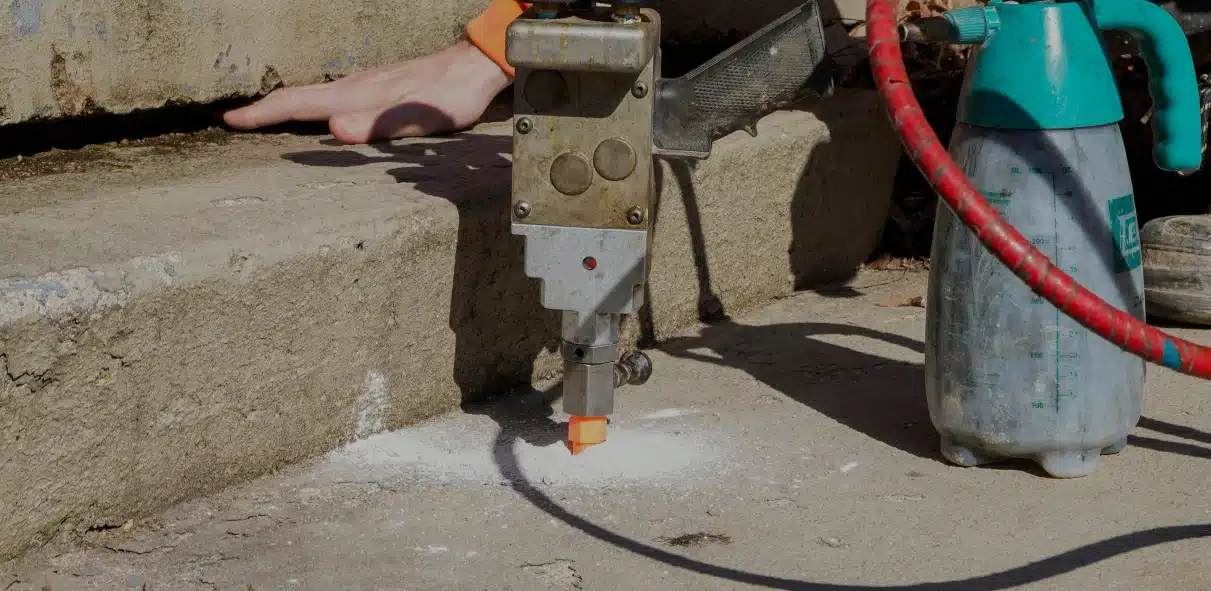
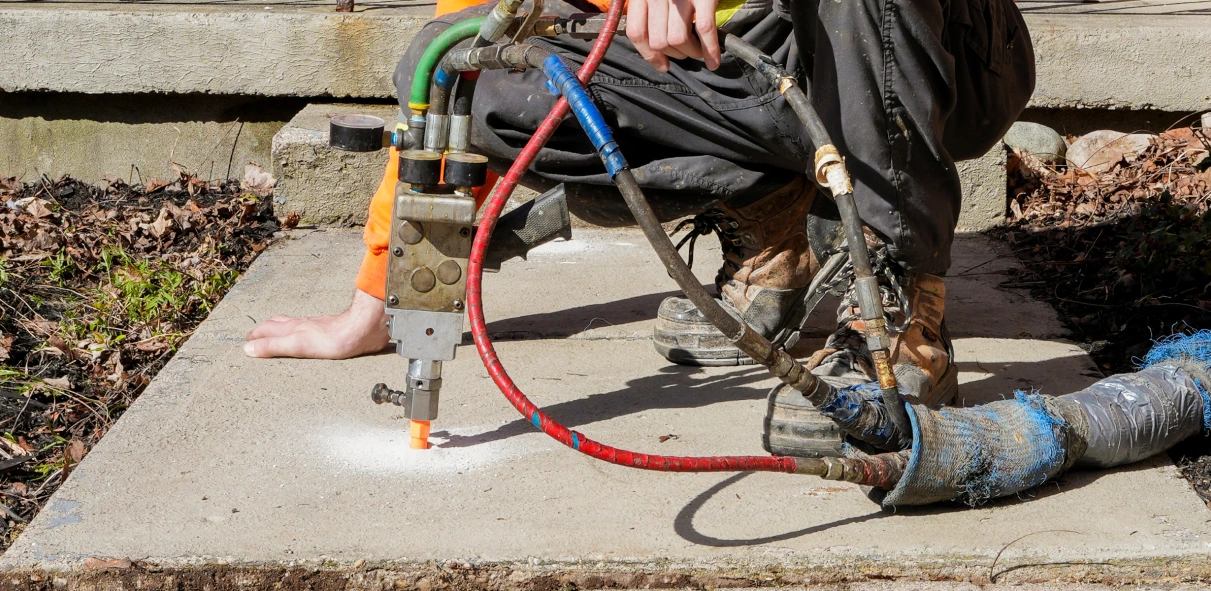
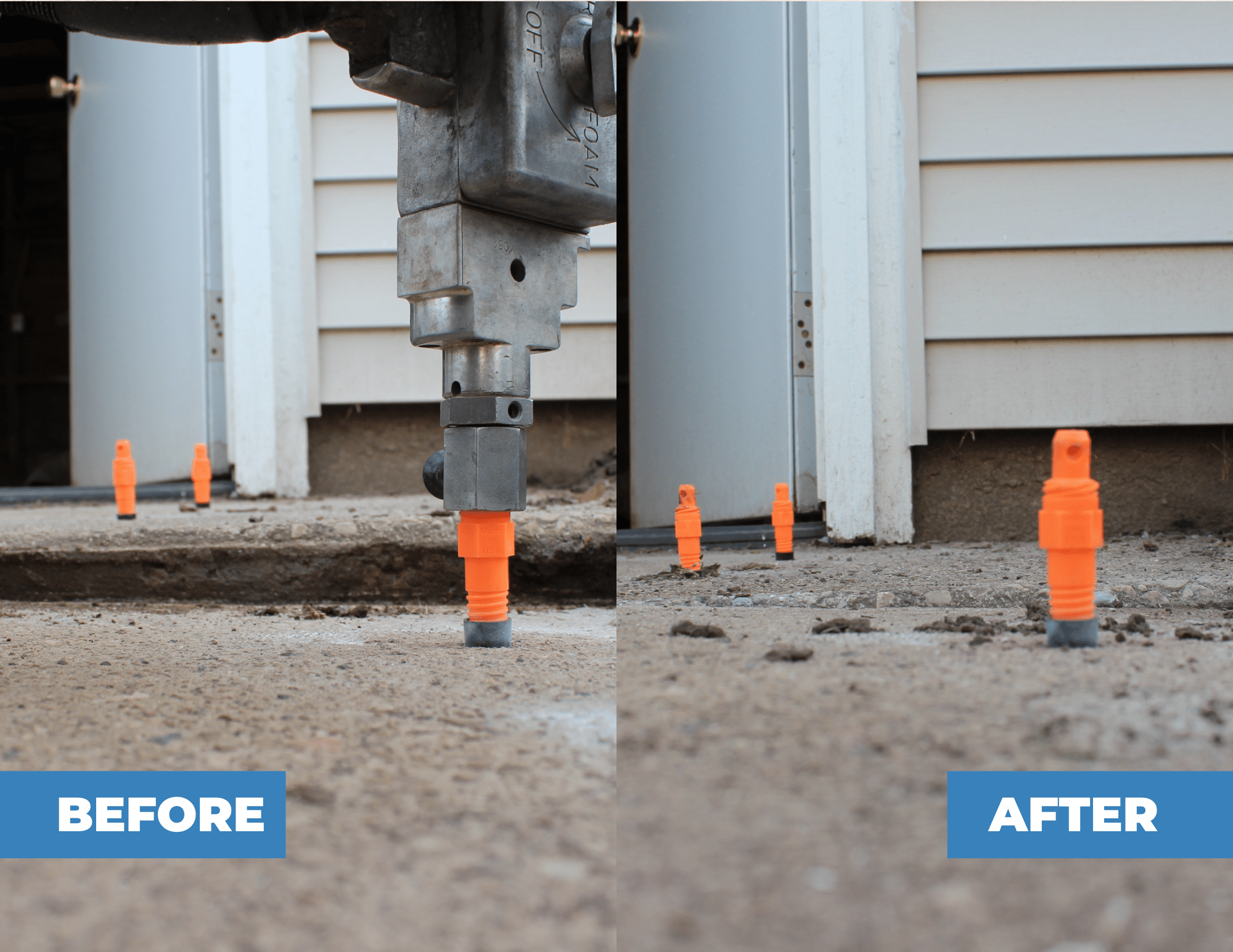
Brosco’s commercial concrete raising and levelling service uses expanding polyurethane foam. The foam is injected through small holes, expands beneath the slab, fills voids, and allows the crew to control lift as the slab rises.
The goal is similar, but the material, weight, injection behaviour, and site impact differ.
How Material Weight Affects the Repair
Material weight is a major difference between the two methods.
Mudjacking relies on a heavier cementitious or grout-style fill. That heavier mass can be useful in some circumstances, especially where larger void filling is the main concern and the added load is acceptable.
Polyurethane lifting uses a much lighter material.
On Brosco’s poly void filling page, the company notes that injected poly foam is far lighter than traditional grout fill and is formulated specifically for void filling and slab support. That lower weight matters because the repair material is not adding as much dead load back onto already compromised soils.
The value of lower material weight varies by site, so it belongs in the repair assessment.
If soil conditions are weak, water has washed out support, or the slab is already struggling with movement, the amount of weight you inject below it matters.
Hole Size, Access, and Surface Impact
The next practical difference is how invasive the work looks from above.
Brosco states that its polyurethane process uses 5/8 inch holes. That is one reason foam lifting is often attractive on finished commercial and agricultural sites where appearance, cleanliness, or operational access matter.
Traditional mudjacking typically requires larger drilled holes because a heavier grout mixture has to move through them.
For owners, that can affect:
- how visible the repair points are afterward
- how easy it is to work around equipment, storefronts, or interior floors
- how much cleanup and patching is involved
- whether surrounding landscaping or finished surfaces are easier to preserve
On a warehouse floor, greenhouse, entrance, equipment pad, or high-visibility walkway, smaller access holes can be a meaningful advantage.
Cure Time, Return to Service, and Lift Control
Return-to-service time matters on an active property.
Brosco notes that its polyurethane foam can often be ready for use within roughly 15 to 20 minutes after injection. That is especially valuable on sites where traffic, forklifts, staff access, deliveries, or customer circulation cannot stay offline for long.
Mudjacking can still be effective, but grout-based systems usually involve a longer wait before full use because the material needs more time to set.
Foam lifting also gives crews controlled expansion for a measured lift on slabs that are still structurally serviceable, an advantage Brosco highlights in its process.
Mudjacking remains a recognized repair method. Missouri DOT guidance notes that it can raise settled slabs and fill voids beneath them, making it a different tool for a similar problem.
Durability Depends on Why the Slab Moved
A lifting repair is less likely to hold up when the root cause of settlement goes unaddressed.
If the slab settled because of:
- poor compaction
- erosion below the slab
- repeated water infiltration
- freeze-thaw movement
- heavy loading on weak subgrade
- voids connected to deeper soil problems
then the repair plan needs to match that cause.
When settlement traces back to weak soil below the immediate void, lifting the slab may address only part of the problem. In those cases, Brosco’s deep soil injection service can help stabilize the deeper soils supporting the slab.
The assessment should identify the cause of settlement before the crew chooses between foam and grout.
When Polyurethane Foam Often Has the Edge
Polyurethane lifting is often a strong fit when a site needs:
- smaller drilled holes
- minimal disruption to operations
- lighter support material beneath the slab
- quick return to service
- controlled lifting on active commercial or industrial surfaces
- support for entries, sidewalks, warehouse floors, greenhouse slabs, or similar working surfaces
That aligns closely with Brosco’s current service focus across commercial concrete services and concrete raising and levelling.
When Mudjacking May Still Be Worth Discussing
Traditional mudjacking can still suit some slabs and site conditions.
It may remain part of the conversation when:
- the slab is a fit for grout-based lifting
- large void filling is a bigger priority than fast return to service
- extra injected weight is not a major concern
- surface appearance and injection-hole size are less critical
- the project team is comparing multiple repair approaches before choosing one
The selected method should follow the site conditions.
When Lifting Is Not Enough and Replacement May Be Better
Not every slab should be lifted.
Missouri DOT guidance notes that badly cracked or broken slabs are poor candidates for effective raising.
Replacement may be appropriate when:
- the slab is badly cracked, broken, or structurally spent
- edges have deteriorated too far for a lift-only repair
- repeated settlement suggests a larger base failure
- drainage and soil problems are too extensive to ignore
- the slab no longer meets how the site is being used
In those cases, a lifting conversation is still useful because it helps confirm whether repair remains realistic or whether money would be better spent on replacement.
How Brosco Helps Property Owners Make the Call
Brosco offers:
- commercial concrete raising and levelling
- poly void filling
- broader commercial concrete services
- support content on repairing commercial concrete
- a free quote by filling out the online form
An on-site assessment can confirm the cause of settlement and identify the repair method that matches the slab and subgrade.
Frequently Asked Questions
Is polyurethane foam better than mudjacking?
For many active commercial, industrial, agricultural, and municipal sites, polyurethane foam offers clear advantages over mudjacking. It is lighter, requires smaller access holes, allows controlled lifting, and can return slabs to service faster. Brosco uses polyurethane foam because these benefits make it a strong fit for the concrete raising and levelling work the company performs.
Why do property owners choose polyurethane lifting so often for active sites?
Because smaller holes, lighter injected material, and quick return to service can make it easier to repair entrances, warehouse floors, sidewalks, and other working surfaces with less disruption.
Can mudjacking still work well?
Yes. Mudjacking is still a legitimate slab-lifting method. It can be a practical fit on the right slab and site conditions, particularly when a grout-based approach is appropriate.
When should I skip lifting and consider replacement?
If the slab is badly cracked, badly broken, repeatedly moving, or dealing with deeper failure that a lift will not solve, replacement may be the better long-term move.
Choose the Method That Fits the Slab
Concrete lifting works best when the repair material, site conditions, and operational needs all line up.
If you are dealing with settled slabs in Southwestern Ontario, use Brosco’s get a quote page to request an assessment and find out whether polyurethane lifting, deeper stabilization, or replacement is the most appropriate next step.